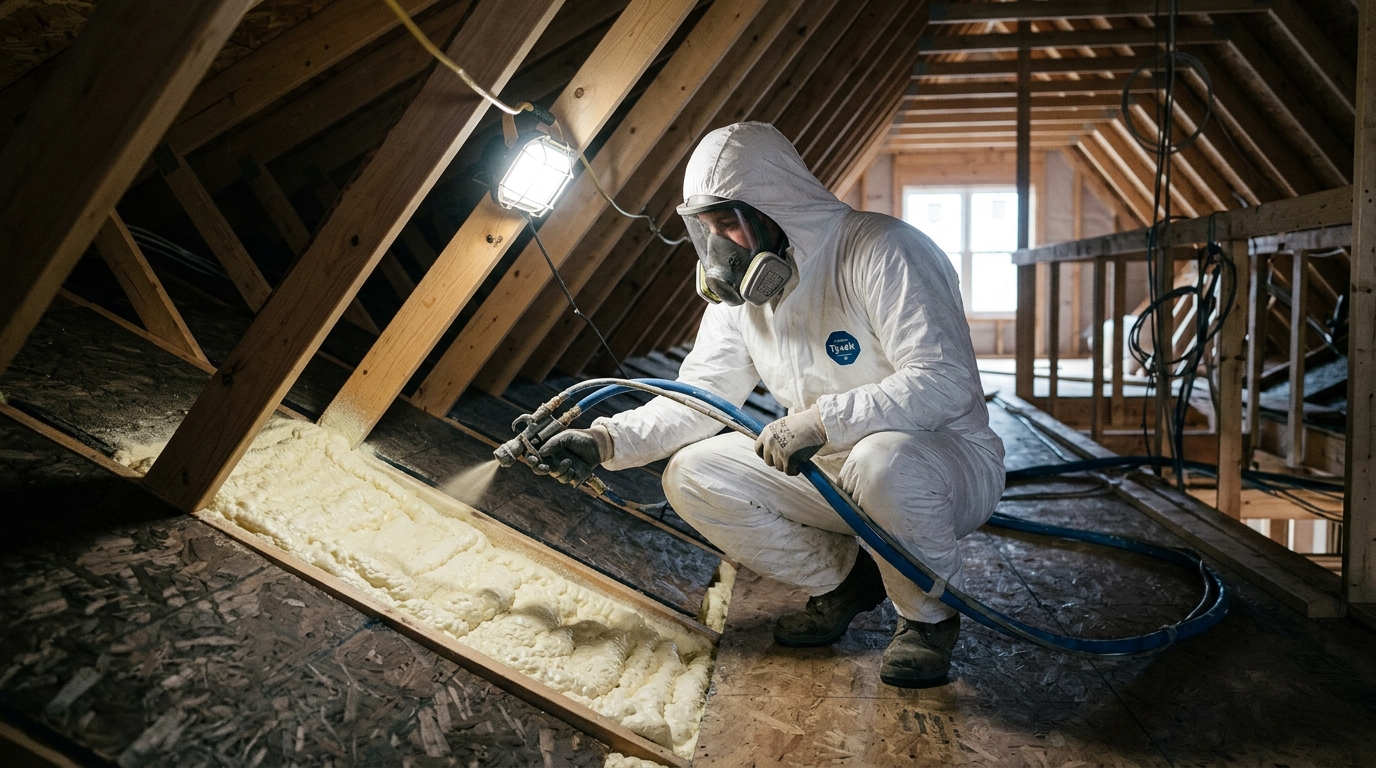
The energy-efficient home upgrades that consistently deliver positive ROI are: air-sealed insulation systems, heat pump HVAC, solar panels with battery storage, smart thermostats, and triple-pane windows. These five categories reduce energy bills, increase home resale value, and qualify for federal and state incentive programs that offset upfront costs.
Spending more on the right features at the start saves significantly more over a home's lifespan than retrofitting cheap systems later. The challenge is knowing which upgrades earn back their premium price - and which ones are marketed loudly but deliver modest real-world returns. Here's a clear-eyed breakdown.
1. Air Sealing and Insulation: The Highest-ROI Upgrade Most Homeowners Skip
Before any mechanical system works efficiently, your building envelope has to hold. Air sealing combined with high-R insulation (R-49 or higher in attic assemblies for most U.S. climate zones) routinely cuts heating and cooling energy use by 15–30%. That's not a minor tweak - it's the foundation every other energy investment depends on.
Spray foam insulation costs more than fiberglass batts upfront, but it provides both air sealing and thermal resistance in a single application. A professional blower-door test (typically $300–$500) identifies exactly where your home leaks before you spend a dollar on insulation. That test pays for itself many times over by directing your dollars where they matter.
The Inflation Reduction Act, extended through 2032, offers a 30% tax credit (up to $1,200 per year) for insulation and air-sealing materials. That credit changes the math dramatically on spray foam attic sealing, which otherwise runs $1,500–$4,500 for a typical home.
2. Heat Pump HVAC: The Upgrade That Replaces Two Systems
A modern cold-climate heat pump - brands like Mitsubishi Hyper Heat, Bosch, and Carrier Infinity - operates efficiently down to -13°F (-25°C). That makes them viable in northern climates where conventional wisdom once said gas furnaces were mandatory. A heat pump handles both heating and cooling from a single system, eliminating a furnace entirely.
Efficiency matters here in concrete terms: a high-efficiency heat pump delivers 200–400% efficiency (expressed as a coefficient of performance of 2–4), meaning every 1 kWh of electricity produces 2–4 kWh of heat. A gas furnace tops out around 98% efficiency - there is no 200% gas furnace.
The 25C tax credit covers 30% of heat pump installation costs, up to $2,000 per year. Combined with utility rebates (often $500–$1,500 additional), the payback window on a $10,000–$15,000 heat pump installation frequently drops to 5–8 years.
3. Solar Panels With Battery Storage: The System That Pays You Back
Rooftop solar paired with a battery (Tesla Powerwall 3, Enphase IQ Battery 5P, or Franklin WH) does something no other home upgrade does: it generates income. Net metering programs in most states credit homeowners for power sent back to the grid, while battery storage captures daytime generation for evening use and backup during outages.
A well-sized 8–10 kW solar system costs $20,000–$30,000 before incentives. The federal Investment Tax Credit (ITC) at 30% drops that to $14,000–$21,000. In states with strong net metering policies - California, Massachusetts, New York, and New Jersey among them - payback periods of 6–10 years are realistic. Battery storage adds $8,000–$15,000 but qualifies for the same 30% credit.
The critical word here is sizing. Oversizing a solar array for a leaky, inefficient house is wasteful. Seal and insulate first, switch to a heat pump, then size solar to meet your reduced load. That sequence is the most cost-effective order of operations.
4. Smart Thermostats: Outsized Returns for a Small Investment
A Google Nest Learning Thermostat or Ecobee Smart Thermostat Premium costs $150–$280 installed. Studies from Lawrence Berkeley National Laboratory found smart thermostats reduce heating and cooling energy use by an average of 8–15%. On a $2,000 annual HVAC bill, that's $160–$300 per year saved - meaning payback in under two years.
What makes smart thermostats genuinely valuable isn't the scheduling (basic programmable thermostats do that). It's the integration: demand response programs through your utility, occupancy sensing that adjusts when no one's home, and - when paired with a heat pump - weather-responsive preconditioning that pre-heats or pre-cools before expensive peak rate periods hit.
This is the lowest barrier entry point to home energy efficiency. Install one first. Use the energy data it generates to understand your home's baseline before committing to larger investments.
5. Triple-Pane Windows: Worth It in the Right Climate
Triple-pane windows with low-e coatings and argon or krypton gas fill (U-factor of 0.17 or lower) outperform standard double-pane windows by 20–30% in thermal resistance. In climate zones 5–7 (Minnesota, Wisconsin, Maine, Colorado mountains), the energy savings justify the 20–40% cost premium over quality double-pane units.
In mild climates - zones 2–3 - the energy math for triple-pane windows often doesn't pencil out on savings alone. In those regions, double-pane with low-e is the better value. The 25C tax credit covers 30% of window costs (up to $600 per year), which makes triple-pane more attractive in cold climates specifically.
Don't replace windows solely for energy savings. If your existing windows are well-sealed, adding interior window inserts (like Indow or Magnetite systems) costs far less and captures most of the thermal benefit without full replacement.
Features That Sound Good But Rarely Deliver Premium ROI
Not every "green" feature earns back its premium. Some popular options underperform:
- Solar shingles (Tesla Solar Roof): Aesthetic appeal is real, but installation costs run 2–3x conventional solar panels for equivalent output. Only justifiable on a full roof replacement.
- Tankless water heaters (gas): More efficient than tank water heaters but the premium is modest. An electric heat pump water heater (Rheem ProTerra, A.O. Smith Voltex) is dramatically more efficient and qualifies for a $300 tax credit.
- Skylights: Skylights lose 3x more heat per square foot than a well-insulated wall. Solar tubes for daylighting are a better option when you want natural light.
- Radiant floor heating as a primary system: Radiant is comfortable but expensive to install and slow to respond. Better suited as a supplemental system in bathrooms.
Comparing the Top 5 Energy-Efficient Home Features
Feature
Typical Cost (Pre-Incentive)
Federal Incentive
Avg. Energy Savings
Payback Window
Air Sealing + Insulation
$1,500–$6,000
30% (up to $1,200/yr)
15–30%
3–6 years
Cold-Climate Heat Pump
$10,000–$15,000
30% (up to $2,000/yr)
30–50%
5–8 years
Solar + Battery Storage
$28,000–$45,000
30% ITC
70–100% of bill
6–12 years
Smart Thermostat
$150–$280
Utility rebates vary
8–15%
Under 2 years
Triple-Pane Windows
$800–$1,400/window
30% (up to $600/yr)
10–20% (cold climates)
8–15 years
The Right Order to Invest
Sequence matters as much as selection. Invest in this order for maximum return:
- Smart thermostat- lowest cost, immediate data and savings
- Air sealing and insulation- reduces the load every other system must meet
- Heat pump HVAC- replaces your least-efficient system with the most efficient option available
- Heat pump water heater- often overlooked; water heating is 15–20% of home energy use
- Solar with battery storage- now sized to a leaner, more efficient home
- Triple-pane windows- only if in climate zones 5–7 and replacing aging windows anyway
Every dollar spent reducing your home's load before installing solar means a smaller, cheaper solar array sized to meet real demand - not wasteful consumption.
---
Do energy-efficient home upgrades increase resale value?
Yes. A 2024 study by the Lawrence Berkeley National Laboratory found that solar panels alone added an average of $15,000 to U.S. home sale prices. Heat pumps and high-efficiency insulation also improve appraisal values, particularly in markets where buyers actively prioritize low utility costs. ENERGY STAR certification adds a measurable premium in most metro markets.
What federal incentives are available for energy-efficient home upgrades in 2026?
The Inflation Reduction Act's residential clean energy credits remain active. The 25C Energy Efficient Home Improvement Credit covers 30% of costs for insulation, heat pumps, heat pump water heaters, and windows - with annual caps ranging from $600 to $2,000 per category. The 25D Residential Clean Energy Credit covers 30% of solar panel and battery storage costs with no annual cap. Both credits are non-refundable but can be carried forward.
Is a heat pump worth it if I already have a new gas furnace?
In most cases, no - not immediately. If your gas furnace is less than 5 years old, the financial case for replacement is weak. However, pairing a mini-split heat pump with your existing system for cooling zones, or adding a heat pump water heater independently, captures significant savings without scrapping functional equipment. Revisit full heat pump HVAC conversion when your furnace approaches end-of-life.
How do I know if my home is a good candidate for solar panels?
Three factors determine solar suitability: roof orientation (south-facing in the northern hemisphere is optimal), roof age (install solar on a roof with 15+ years of life remaining), and local net metering policy (check your state's policy through the Database of State Incentives for Renewables and Efficiency at dsireusa.org). A reputable installer will provide a shading analysis using tools like Aurora Solar or Solargraf before quoting.
Are there energy-efficient upgrades worth doing in a rental property?
Yes - specifically upgrades that reduce landlord-paid utility costs or qualify for commercial energy tax incentives. Heat pump water heaters, smart thermostats on common areas, LED lighting, and insulation in units where the landlord pays heat are reliably worthwhile. Solar with a lease structure can also work for rental properties. Tenant-paid utilities change the calculus significantly, though energy-efficient units command higher rents in competitive rental markets.